A luxury home rarely sells because it is simply more expensive than its neighbours. It sells when the right buyers can quickly understand what makes it exceptional: the proportions of the rooms, the quality of the renovation, the privacy of the lot, the architecture, and the way the property supports their life. That is the starting point for how to market luxury homes in Toronto.
For sellers in the $1.5 million to $4 million-plus range, broad exposure still matters, but reach alone is not a strategy. A thoughtfully prepared campaign has to make a persuasive case to a smaller, more analytical buyer pool. In neighbourhoods such as The Kingsway, Lawrence Park, Leaside, Rosedale, Swansea, and Forest Hill, buyers often compare a home against a narrow set of nearby alternatives with very different land, condition, and lifestyle attributes.
Start with a defensible pricing position
Luxury pricing is not a matter of adding a premium to the most recent sale down the street. Comparable properties need to be examined for lot dimensions, orientation, renovation quality, ceiling height, parking, school catchment, views, and the less tangible qualities that influence a buyer’s emotional response.
A renovated detached home on a quiet, tree-lined street may deserve a different position from a larger house near a busy arterial road. Likewise, a home with a ravine setting or an unusually deep lot can attract a buyer who values privacy more than interior square footage. The goal is to identify the features that genuinely command a premium, rather than treating every upgrade as equal dollar-for-dollar value.
The list price also sets the tone for the campaign. Price too high and the first weeks can pass without the feedback needed to build momentum. Price too low without a clear plan, and sellers may attract attention from buyers whose budgets do not match the property’s true market position. The right approach depends on current competing inventory, recent comparable sales, and whether the home is likely to appeal to a broad audience or a highly specific one.
Before going live, ask a practical question: if a qualified buyer sees this home alongside the three strongest alternatives, what makes the price make sense? The marketing should answer that question clearly.
Prepare the home for its particular buyer
Luxury presentation is not about making a house look generic. It is about making its best qualities legible in photographs, video, and in person. A restored Edwardian in The Annex should not be styled like a new-build in Humber Valley. A contemporary home in Etobicoke with large glass walls and a landscaped rear garden needs a different visual treatment than a Yorkville condominium with city views.
Preparation begins with editing. Personal collections, heavy furniture, crowded surfaces, and mismatched lighting can obscure architecture and scale. That does not mean stripping the home of character. It means allowing details such as millwork, stone, fireplaces, custom cabinetry, and sightlines to do their work.
Address visible condition issues before launch. In an upper-tier price range, buyers may be willing to take on a project, but they tend to be exacting about the price adjustment required. A dated powder room may be manageable. Deferred exterior maintenance, worn flooring, or a poorly finished basement can create doubt about the rest of the home. Sellers do not need to renovate blindly, but should decide which improvements will reduce objections and which are unlikely to be recovered.
Build a campaign, not a listing
The strongest luxury marketing presents a property as a complete proposition. Professional photography remains essential, but it should be supported by purposeful writing, floor plans, video where it adds value, and a distribution plan that reaches likely buyers and their representatives.
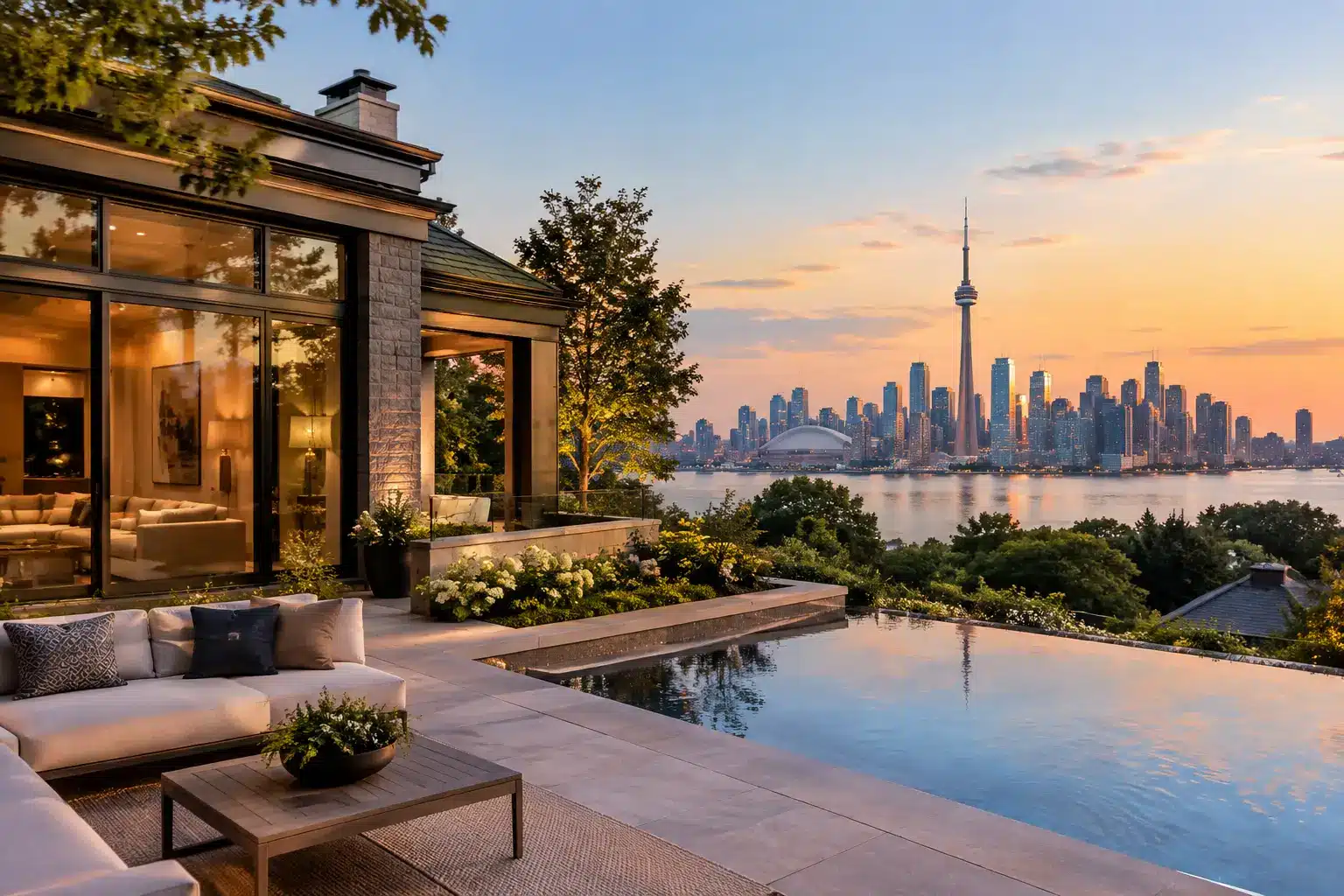
Photography should show more than wide-angle rooms. It needs to establish a sequence: arrival, principal living spaces, kitchen, private areas, outdoor living, and the details that distinguish the home. Exterior images deserve particular attention. Mature gardens, terraces, pools, views, and architectural façades can be major decision drivers, especially when the home offers something difficult to reproduce.
Property copy should be specific rather than inflated. “Elegant” and “stunning” tell a buyer very little. Explain that the kitchen has a professional-grade range, that the primary suite occupies its own level, that the garden backs onto a ravine, or that the home is a short walk to a particular village street, park, or transit connection. Concrete details create credibility.
For some homes, a cinematic video and targeted social promotion are worthwhile. For others, especially properties whose value depends on craftsmanship or location, refined photography, a strong brochure, and well-managed private appointments may be more effective. The format should follow the property, not a standard package.
Market the lifestyle without overselling it
A luxury buyer is not only purchasing rooms. They are assessing how the home will feel on an ordinary Tuesday, during a dinner party, or over a weekend with family. The marketing can communicate this through the flow from kitchen to garden, a quiet home office, a walkable main street, or an unobstructed sunset view from a terrace.
That said, lifestyle language must stay grounded. If a home is near a busy road, do not pretend it is secluded. If the lot is compact, focus on the quality of the outdoor design rather than calling it expansive. Clear positioning earns more trust than polished exaggeration.
How to market luxury homes through buyer access
A listing can be beautifully produced and still underperform if showings are difficult or poorly handled. Qualified purchasers in this segment often have demanding schedules, advisers involved in the decision, and specific questions about renovation history, property boundaries, zoning, and carrying costs. They need enough access and information to move forward with confidence.
Showings should be organized around the home rather than rushed. For a larger property, that may mean allowing enough time for buyers to experience the garden, lower level, or coach house instead of treating the visit as a quick walkthrough. Sellers should also consider the trade-off between open houses and private appointments. An open house can increase awareness, but a private showing may better suit a home where privacy, security, or a more tailored presentation matters.
A complete information package helps the buyer’s agent do their job. Where available, include permits, surveys, utility information, feature lists, renovation dates, and relevant details about appliances or systems. This does not replace legal due diligence, but it reduces uncertainty at the point when serious interest begins.
Treat feedback as market intelligence
The first rounds of feedback are useful only when they are interpreted honestly. “Buyers loved it” is not enough. Sellers need to know whether visitors questioned the price, reacted to the kitchen layout, compared the home unfavourably with a nearby listing, or simply were not the right audience.
Patterns matter more than one-off comments. If multiple well-qualified buyers raise the same concern, the response may be a presentation adjustment, clearer disclosure, a targeted repair, or a pricing review. If feedback is positive but offers do not materialize, examine whether the campaign is reaching buyers with the necessary budget and whether the property is being compared against stronger value elsewhere.
In a measured market, patience can be sensible. But patience is not passive. A listing that has lost freshness may need a revised message, new imagery, a change in showing strategy, or a meaningful repositioning. Waiting without changing the underlying case for the home rarely improves the outcome.
Negotiate beyond the headline price
A strong offer is not automatically the highest number. Deposit size, financing conditions, inspection terms, closing date, inclusions, and the buyer’s ability to perform all affect the real value of an agreement. This is especially true for distinctive homes, where a failed deal can cost valuable market time.
Good negotiation begins before an offer arrives. Sellers should know which terms are flexible and which are not. A preferred closing date, a leased item, or an important fixture can become unnecessarily contentious if the response is improvised. Clear preparation lets the negotiation focus on the issues that truly matter.
For homeowners, the financial side also includes the cost of selling. Premium marketing, sound advice, and careful negotiation should not require giving up more equity than necessary. One Percent Guys is built around that principle: full-service representation with a clear focus on keeping more of the sale proceeds in the seller’s hands.
The best luxury campaigns feel composed because the work happens before the first buyer walks through the door. Price the home with evidence, present it with intention, make access easy for qualified buyers, and respond to the market without ego. That is how a property earns attention for the reasons that matter.