
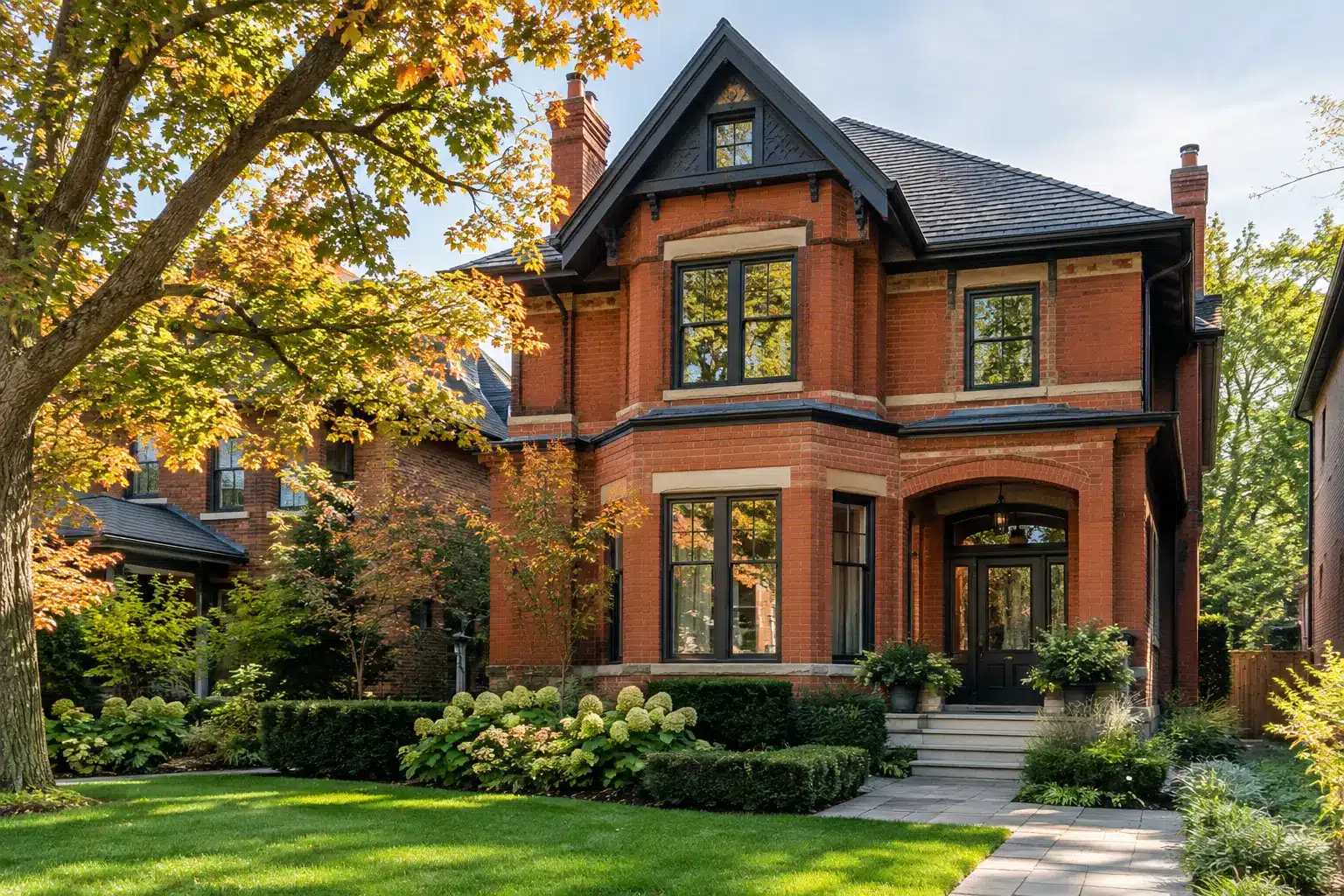
A heritage property is not simply an older home with attractive details. Its original windows, masonry, millwork, roofline and relationship to the street may be part of what a buyer is purchasing – and, in some cases, what municipal policy protects. To prepare a heritage home sale well, the goal is not to make the property look new. It is to present its character honestly, address issues that can undermine confidence, and give serious buyers clear information before they begin to speculate about cost and risk.
This matters particularly in Toronto neighbourhoods where period homes attract discerning buyers. In areas such as The Annex, Rosedale, High Park, Swansea, Leaside and The Kingsway, buyers often pay a premium for architectural integrity, but they are equally alert to deferred maintenance and renovation work that may have been done without the right approvals.
Start with the Property’s Heritage Status
The word “heritage” is used loosely in real estate, but the legal position can vary significantly. A home may be individually designated under the Ontario Heritage Act, included in a Heritage Conservation District, listed on the City of Toronto’s heritage register, or simply be an older home with period features. These situations do not carry the same obligations.
Before listing, confirm what applies to the property and obtain the documentation. If the home is designated or located in a Heritage Conservation District, exterior alterations that affect protected attributes can require heritage approval, often alongside regular building permits. A listing should not imply that a buyer can easily add a third storey, alter the façade or replace distinctive windows unless that potential has been properly investigated.
This is also the time to gather records for prior work. Building permits, heritage approvals, contractor invoices, architectural drawings, warranties and photographs taken before or during a renovation all help establish a credible history. Missing paperwork does not automatically derail a sale, especially for work completed decades ago, but it can affect how a buyer assesses risk.
For a higher-value property, consider asking a heritage architect or qualified consultant for a concise review of the home’s character-defining features and any visible concerns. It is not a substitute for a buyer’s due diligence, but it can help sellers decide where preparation dollars are worth spending and where restraint is wiser.
Prepare a Heritage Home Sale by Prioritizing Condition
Buyers can forgive a kitchen that reflects another era more readily than they can forgive uncertainty about water penetration, structure or electrical safety. The most productive preparation work is usually practical rather than cosmetic.
Start with the building envelope. Have the roof, eaves, flashings, chimneys, gutters, brickwork and grading assessed where there are signs of wear. Older Toronto homes commonly show mortar deterioration, movement around lintels, aging flat-roof details or moisture at basement walls. These issues do not make a home unsellable. Left unexplained, however, they can become a negotiating lever after inspection.
Then look at the major systems. A pre-listing review of heating, cooling, plumbing, electrical service and visible knob-and-tube or aluminum wiring can prevent surprises. Buyers of a $2 million or $3 million heritage home are not expecting a maintenance-free property, but they do expect evidence that the home has been responsibly cared for.
Not every issue should be repaired before sale. If an older boiler is working well but approaching the end of its typical service life, disclose the age and price the home accordingly rather than installing equipment that may not change buyer perception. If there is active leakage, unsafe wiring or a clear building-envelope failure, addressing it is usually more prudent than hoping a competitive offer process will make it disappear.
A careful pre-listing inspection can be useful, particularly when the property has not traded for many years. Its value is not in producing a perfect home. Its value is in allowing the seller to understand likely questions, complete targeted repairs and prepare accurate answers. Sellers should still expect purchasers to conduct their own inspections.
Preserve What Buyers Cannot Recreate Easily
The strongest heritage-home presentation separates patina from neglect. Original plaster mouldings, leaded or stained glass, pocket doors, quarter-sawn oak floors, fireplace surrounds and well-proportioned principal rooms are not defects to be modernized out of existence. They are often the reason a buyer chose the home over a newer alternative.
Clean, repair and document these elements. Refinish floors only when they genuinely need it. Retain original hardware where possible. Repair cracked plaster thoughtfully rather than covering every imperfection with generic finishes. If windows are original, make sure they operate as well as reasonably possible, recaulk where appropriate and have an informed answer ready about maintenance, storm windows or any prior restoration.
The trade-off is real. Some buyers value restored authenticity above all else, while others want the comfort and efficiency of a comprehensive renovation. A seller does not need to satisfy both groups through a costly, halfway update. In many cases, a well-maintained home with an honest scope for future improvement is more compelling than a rushed renovation that interrupts the architecture.
Outdoor spaces deserve the same discipline. Repointing, ironwork repair, landscape pruning and a clean approach to the front entry can materially improve first impressions. Avoid adding features that compete with the façade or make the property feel overly styled. On a distinguished streetscape, proportion and condition carry more weight than novelty.
Price the Home as a Property, Not a Renovation Project
Heritage homes are difficult to price by formula. Nearby sales matter, but a comparable sale may have a different heritage status, a more modern interior, a larger lot, a finished basement, parking, ravine exposure or a renovation budget that is not obvious from listing photos.
A sound pricing strategy begins with the land, location and replacement difficulty of the home’s character. Then it accounts for current condition, system upgrades, usable square footage, approvals and realistic future potential. In established neighbourhoods, buyers may place substantial value on an intact façade and period interior, but they will still discount for a roof, foundation or renovation scope that feels open-ended.
Do not use a renovation estimate as if it were a fixed deduction from market value. Construction costs vary sharply depending on structural changes, heritage requirements, access, finishes and timing. Instead, position the home clearly: either as a maintained historic residence with selective opportunities to personalize, or as a property with defined potential supported by documentation and a price that recognizes the work ahead.
For premium homes, the net-proceeds conversation should be equally disciplined. Listing preparation, marketing, staging decisions and commission are all selling costs, but each should be evaluated against the likely effect on buyer confidence and the final result. One Percent Guys takes this full-service approach while keeping the listing side focused on retaining more of the seller’s equity.
Make the Marketing Specific and Credible
Generic language weakens a distinctive property. “Charm” and “character” say very little unless the marketing shows buyers exactly what is meaningful: the original staircase, the carved newel post, the arched opening, the restored brick, the addition designed to respect the original structure, or the garden setting that gives the home privacy.
Professional photography should show the home in context, including the façade, principal rooms, architectural details and exterior spaces. Floor plans are especially useful in older homes, where room flow can be less predictable than in newer construction. If the property has a notable renovation, include the year, scope and professional team where appropriate. If it has heritage designation or district status, present that fact accurately and without making promises about future approvals.
Sellers should also prepare a concise property information package. It may include utility costs, survey information, permits, renovation records, recent service reports and a clear list of inclusions. This reduces back-and-forth during a conditional period and signals that the property has been managed carefully.
Be Ready for Detailed Buyer Questions
The right buyer for a heritage home often asks better questions than the average buyer. Expect discussion about insulation, window performance, basement moisture, renovation approvals, chimney maintenance, parking, landscape restrictions and whether an addition or rear-yard project could be feasible.
The best response is factual and measured. Do not guess about what the City will permit, and do not minimize a known issue. Where an answer depends on municipal review or professional advice, say so plainly. Clear disclosure and organized documentation will not eliminate negotiation, but they can keep negotiations centred on value rather than uncertainty.
A heritage home does not need to look untouched to sell well. It needs to feel understood. When its condition, documentation and architectural value are presented with care, buyers can see both the life they could enjoy now and the stewardship they would be taking on next.

